Educational Materials Library
The National Waterbug Blitz is Australia’s first nationwide, citizen science, waterway monitoring event. In spring each year, Australians are encouraged to discover how healthy their local waterways and wetlands are, simply by exploring and identifying what waterbugs live in them. Many schools, farmers, local residents, catchment or Landcare and other community groups, are collecting information on local waterway biodiversity through surveys of water life.
Participants usually attend a workshop or training event hosted by a local group and take water samples containing freshwater macroinvertebrates, which can include various stages of life, from dragon flies, damselfies, mayflies, caddisflies, waterbeetles and many more species that inhabit the water in creeks or waterways.
Aquatic invertebrates, though small, play a very important role in determining a waterway’s health These tiny creatures are very sensitive to changes in the waterway. Therefore, the condition of the wetland, creek or river can be easily determined by the presence or absence of these creatures. Thus in very disturbed water only very hardy species (those not sensitive to pollutants or sediment run off for example) will be present. Snails, bloodworms or backswimmers would be most commonly found.
The Waterbug App is free to download. However, it’s not just as simple as taking a photo. Participants need to have the correct resources, to collect the water samples, such as a fine mesh net, buckets and sampling materials to pick the live samples and classify them before the photo can be taken and uploaded.
It’s intense work, requiring at least two people to help as well as a safety factor whenever one is working in water. Involving adults and children to get outdoors to try hands-on activities to learn about freshwater ecosystems has to be a bonus in any science activity!
Related Images:

A series of information sheets on soil properties and soil erosion by Southern Queensland Landscapes and the Queensland Department of Resources provides an excellent introduction to soil science. Lucidly illustrated, they are suitable for mid-year to senior science students.
01
02
04
05
06
07
09 Understanding soil texture.
Related Images:
A series of 30 exercises for students is available on the TED site Earth School. The exercises, called “Quests”, encourage students globally to “celebrate, explore and connect with nature”. A certificate is emailed upon completion of the 30 exercises.
Related Images:
Australian Dr John Cook has developed a game, Cranky Uncle, to explain global warming and climate denialism. The game is promoted on the site www.skepticalscience.com as a teaching tool, for secondary and tertiary levels. The game is accompanied by a book and a Teachers’ Guide.
The website has a wealth of material on climate change and global warming. The site is tailored towards a popular audience and is authoritative.
Related Images:
By Jodi Rowley Curator, Amphibian & Reptile Conservation Biology, Australian Museum
Australia has 240 known species of frog, almost all of which are found nowhere else in the world. Some species are flourishing, like the Striped Marsh Frog. But others have declined dramatically since the 1980s, and four have become extinct.
Croaks, whistles, bleats and barks – every frog species makes a different sound. By recording a frog call with the FrogID app, students will discover which frogs live around them and help us count Australia’s frogs, empowering your students to be citizen scientists.
FrogID is a national citizen science project that is helping us learn more about what is happening to Australia’s frogs. All around the country, people are recording frog calls with nothing more than a smartphone.
With the data obtained through FrogID we are able to track the Cane Toad and identify where frogs are thriving and where they aren’t. And by matching calls to weather and habitat, we are learning more about how different frog species are responding to a changing environment.
Get your class and students involved in FrogID:
- Create account & group at FrogID.net.au
- Instruct students to create account & join class
- Download the FrogID App, Sign In & Record
- Check Leaderboard for Results
Related Images:
Wet rocks
Wet Rocks is an initiative of the Teacher Earth Science Education Programme: Groundwater Education Resources for Teachers
Wet Rocks is a valuable resource for both learning and teaching about groundwater. Relevant to the Australian Curriculum, Wet Rocks introduces study of groundwater and its place in the water cycle, how it
is formed, its importance as a resource, and the complexities of groundwater management.
Groundwater primer

This four-page introduction to groundwater by the University of NSW is suitable for secondary students.
Related Images:

A useful index to materials to help with the identification of weeds was published by Moreton Bay Regional Council in its Voluntary Conservation Programs Update Newsletter of May 2020. Thanks to Council for permission to republish this index here. Click on the image above to bring up a PDF that contains the hotlinks to the various resources identified.
Online_weed_guideRelated Images:
The Queensland Government’s Long Paddock website has provided climate and pasture information to the grazing community since 1995. The site provides access to rainfall and pasture outlooks and decision-support tools to support land management decision-making and planning for landholders, educators, consultants and extension officers.
The SILO site, a component of the Long Paddock, is a database of Australian climate data from 1889 to the present. It provides daily meteorological datasets for a range of climate variables in ready-to-use formats.
Related Images:
Algal blooms were evident in the lower Pumicestone Passage and on Bribie Island beaches late in October 2019. This media report aims to dispel some myths that these phenomena are “natural” events without human influence. A potential solution (constructed wetlands to alleviate stormwater impacts) is flagged. Sewage is also a major contributor to phosphorus pollution in Moreton Bay. The aquatic systems are under stress: these warning signs need to be heeded.
Related Images:
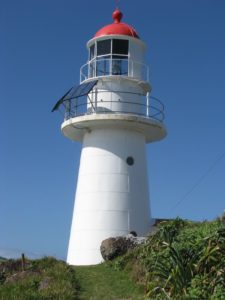
Ron Turner, former Ranger-in-Charge at Cooloola National Park, with wife Yvonne, has written some thoroughly readable memoirs of his experiences. Take for example the charming e-book Living at a Lighthouse, chronicling sojourns at Bustard Head and Double Island Point lighthouses on Queensland’s central-south coast. This is available under Creative Commons BY 4.0 by generous permission of David Hibbert, of the central Victorian town of Alexandra and is an e-book published on his Artworkz website http://esplash.me/ .